
How Often Should You Feed a Cat? A Simple Guide to Cat Feeding Schedules


Feeding your cat may seem like a simple task, but knowing how often to offer food can make a big difference to its health and happiness. Some cats prefer several small meals throughout the day, while others are comfortable eating two larger meals. The right schedule depends on your cat’s age, activity level, health, and individual needs.
Whether you have a playful kitten or a relaxed adult cat, establishing a consistent feeding routine helps keep your pet healthy. Here is a simple guide to understanding how often you should feed your cat and how to create a schedule that works for both of you.
1. How Often Should You Feed an Adult Cat?
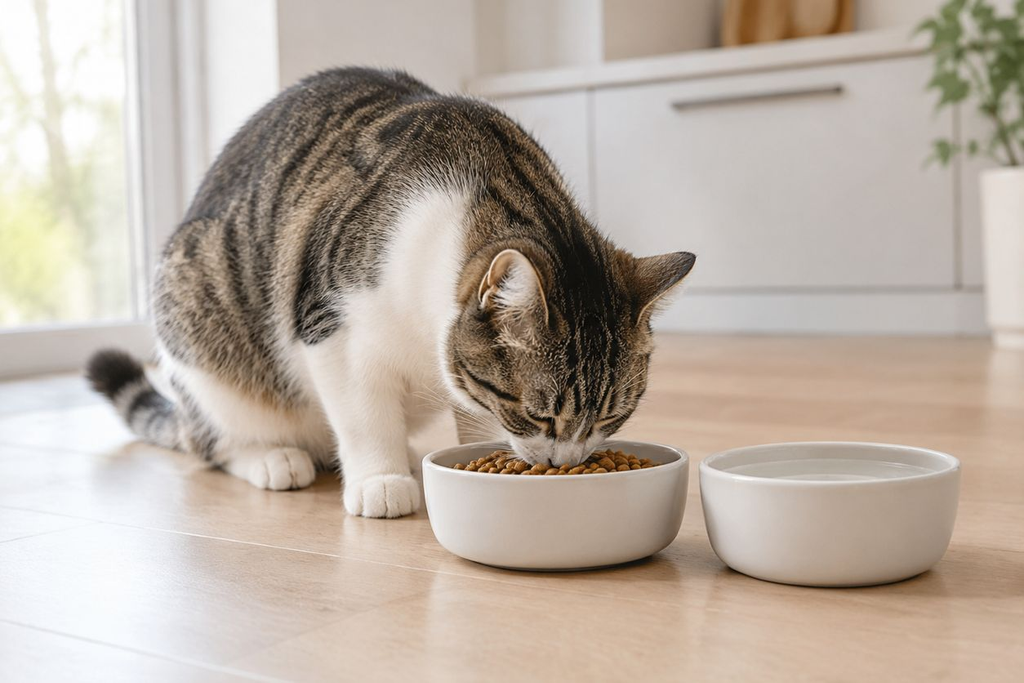
Most healthy adult cats do well with two measured meals per day, usually spaced around 8–12 hours apart. For example, you could feed your cat in the morning before work and again in the evening.
However, some cats prefer three or four smaller meals throughout the day. This can work well as long as you measure the total daily food allowance and avoid giving too much food.
The most important thing is not simply the number of meals. You should also consider how much your cat eats throughout the day. Follow the feeding guidance on your cat’s food packaging and adjust portions according to its weight, activity, and body condition. Your veterinarian can help determine the appropriate daily amount.
2. How Often Should You Feed a Kitten?

Kittens need more frequent meals than adult cats because they are growing quickly and require plenty of energy.
During the early weeks, kittens depend on their mother’s milk or an appropriate kitten milk replacer if they cannot nurse. Weaning generally begins around four weeks of age, when kittens gradually start eating suitable kitten food.
A practical feeding schedule for growing kittens is:
- Under four weeks: Mother’s milk or an appropriate kitten milk replacer, according to age and veterinary guidance.
- Four to eight weeks: Gradually introduce kitten food during the weaning process.
- Two to six months: Offer around three to four meals daily.
- Six to twelve months: Usually provide two to three meals daily, depending on the kitten’s needs.
Choose food specifically formulated for kittens, as it provides nutrients needed for healthy development. Very young or orphaned kittens require special feeding instructions from a veterinarian.
3. Should You Feed Your Cat Wet Food or Dry Food?
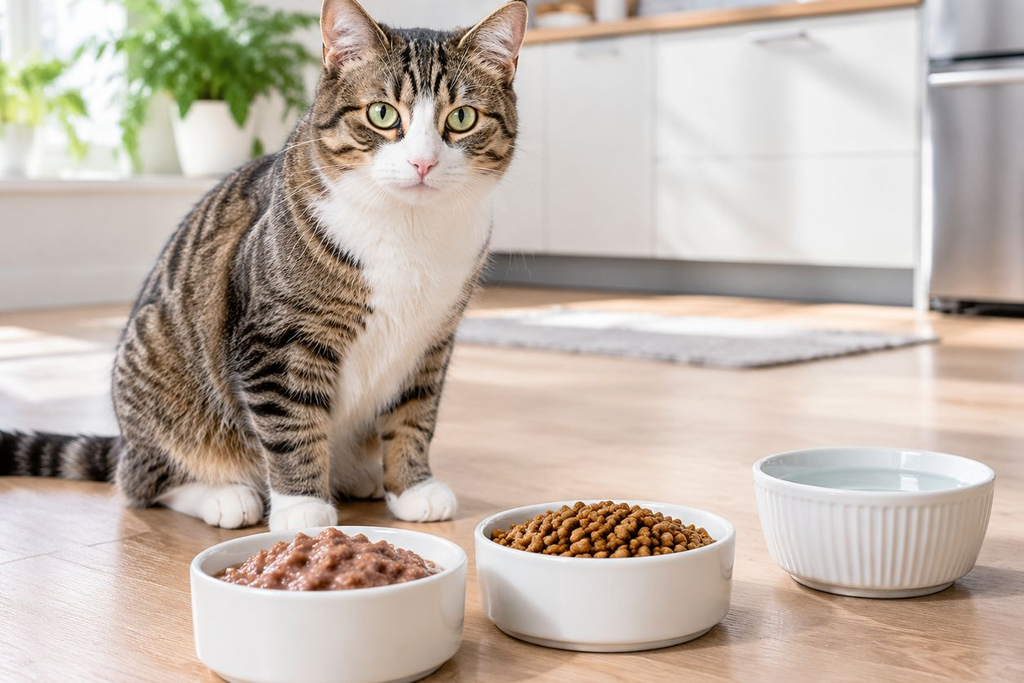
Both wet and dry cat food can be suitable choices when they provide complete and balanced nutrition for your cat’s life stage.
Wet food contains more moisture, which can help increase your cat’s water intake. This may be particularly useful for cats that rarely drink from their water bowls.
Dry food is convenient to measure and store. Some owners use automatic feeders to serve measured portions when they are away from home.
You can also combine wet and dry food. If you do, remember to account for the calories from both types so your cat does not eat more than it needs.
Whatever option you choose, check the packaging to ensure the food is appropriate for your cat’s age and nutritional requirements. Always provide fresh, clean drinking water.
4. Is Free-Feeding a Good Idea?

Free-feeding means leaving food available for your cat to eat whenever it wants. Although this approach may seem convenient, it is not ideal for every cat.
Some cats can regulate their intake reasonably well, but others continue eating even when they are no longer hungry. This can lead to weight gain and make it difficult to monitor how much your cat eats.
Leaving wet food out for extended periods can also cause it to spoil, particularly in warm conditions.
Measured meals make it easier to track your cat’s appetite and notice changes in eating habits. If you prefer to leave dry food available, measure the daily allowance rather than repeatedly filling the bowl.
For cats that eat too quickly, puzzle feeders and slow-feeding bowls can help make mealtimes more engaging.
5. How Much Food Does Your Cat Need?

There is no single portion size that suits every cat. A small, inactive indoor cat may need fewer calories than a larger, more active cat.
Your cat’s ideal daily food amount depends on factors such as age, body weight, activity level, reproductive status, and health.
Start with the feeding recommendations on the food packaging, using your cat’s current weight and the manufacturer’s guidance. Then monitor its body condition and weight over time.
If your cat is gaining too much weight, you may need to adjust portions. If it is losing weight unexpectedly, consult a veterinarian rather than simply increasing its food.
Treats should also be counted as part of its daily intake. As a general guideline, treats should provide no more than 10% of a cat’s daily calories.
6. Signs Your Cat’s Feeding Routine Needs Attention
A healthy feeding routine should leave your cat satisfied while maintaining a suitable body weight.
Watch for sudden changes in appetite, unusual weight loss or gain, repeated vomiting, or increased thirst. These changes can sometimes indicate an underlying health problem.
If your cat regularly begs for food, check whether its meals are properly measured and whether its daily nutritional needs are being met. Avoid automatically adding extra food without reviewing its total intake.
Contact your veterinarian if your cat stops eating, particularly if it has eaten little or nothing for around 24 hours. Kittens and cats with existing health conditions may need attention sooner.
Final Thoughts
Most healthy adult cats can thrive on two measured meals per day, while kittens generally need more frequent feeding as they grow. Wet food, dry food, or a combination of both can work when the diet is nutritionally complete and portions are appropriate.
The best feeding schedule is one that fits your cat’s age, health, and daily needs. Establish consistent mealtimes, provide fresh water, monitor your cat’s weight, and seek veterinary advice when its appetite changes unexpectedly.
With the right routine, feeding your cat becomes easier and helps support a healthier, happier life.