
How to Survive Giving Your Cat a Bath: 7 Tips for a Stress-Free Experience

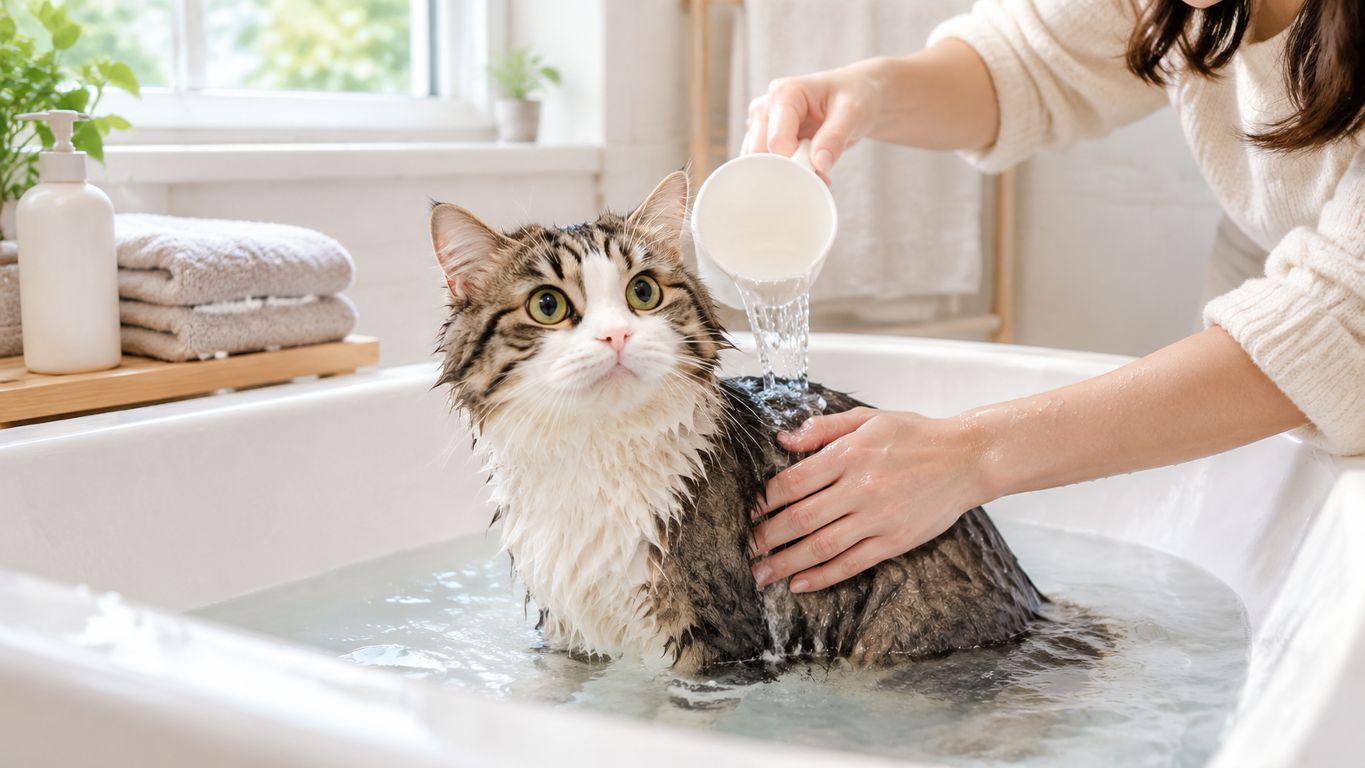
Giving your cat a bath can feel like preparing for a small battle. One minute, your cat is peacefully relaxing on the sofa. The next, it has disappeared under the bed because it somehow knows what you are planning. If you have ever tried to bathe a cat, you probably understand the struggle.
The good news is that most healthy cats do not need frequent baths because they groom themselves regularly. However, there are times when a bath becomes necessary, such as when your cat gets covered in something dirty or sticky.
With a little preparation, patience, and the right approach, you can make bath time safer and less stressful for both you and your furry friend. Here are seven practical tips to help you survive giving your cat a bath.
1. Decide Whether Your Cat Really Needs a Bath
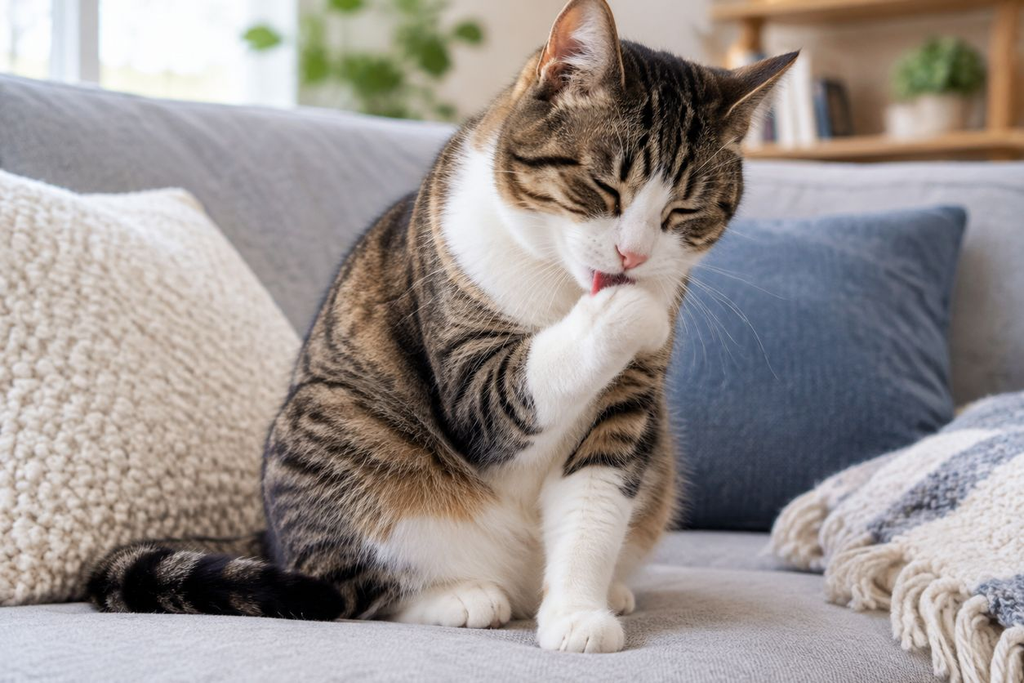
Before filling the bathtub, ask yourself whether a bath is actually necessary. Cats are naturally clean animals, and their rough tongues help remove loose hair, dirt, and debris from their coats.
For many cats, regular brushing is enough to keep their fur clean and healthy. Long-haired cats may need extra grooming to prevent mats and tangles.
However, a bath may be helpful if your cat has something unpleasant on its fur or cannot clean itself properly. Cats with certain skin conditions may also need special bathing products recommended by a veterinarian.
Important: If your cat gets a potentially toxic substance on its fur, contact a veterinarian promptly for advice. Do not assume an ordinary bath will make the substance safe.
2. Prepare Everything Before Your Cat Notices
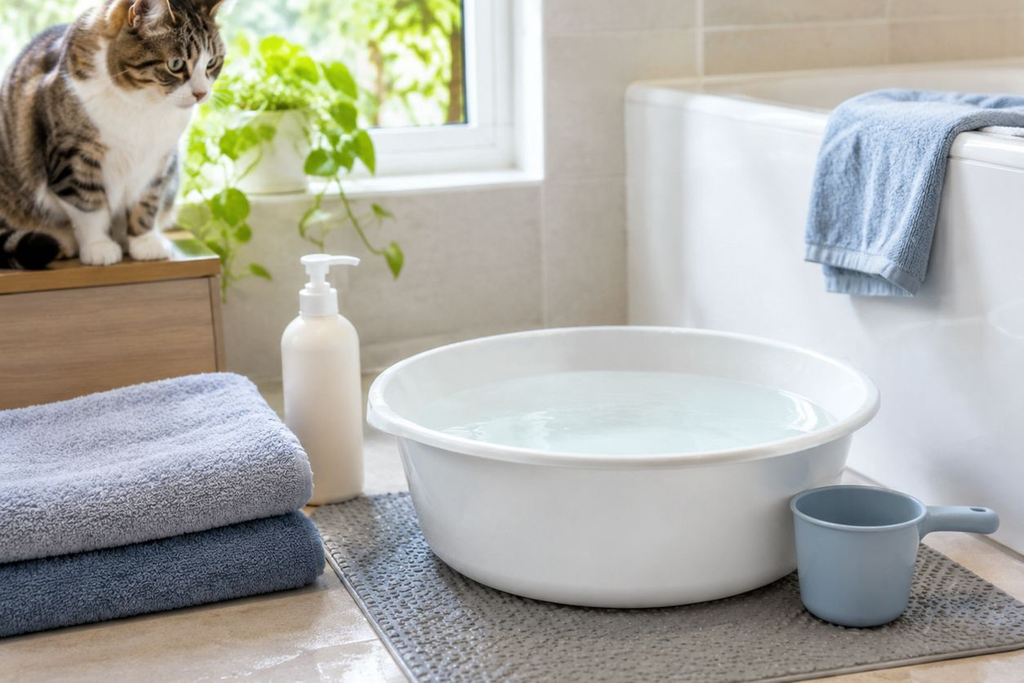
One of the biggest mistakes is bringing your cat into the bathroom before gathering your supplies. Once your cat realizes what is happening, finding a shampoo bottle or towel can become surprisingly difficult.
Prepare everything before starting. You will need cat-safe shampoo, several soft towels, a non-slip mat, a cup for rinsing, and a container of comfortably warm water.
Choose a quiet room with a closed door to prevent your cat from escaping into the house with wet fur. Keep the water shallow, and avoid running a noisy shower if your cat is frightened by the sound.
Never use human shampoo or dog shampoo unless a veterinarian specifically confirms it is suitable for your cat.
3. Trim the Drama Before It Starts
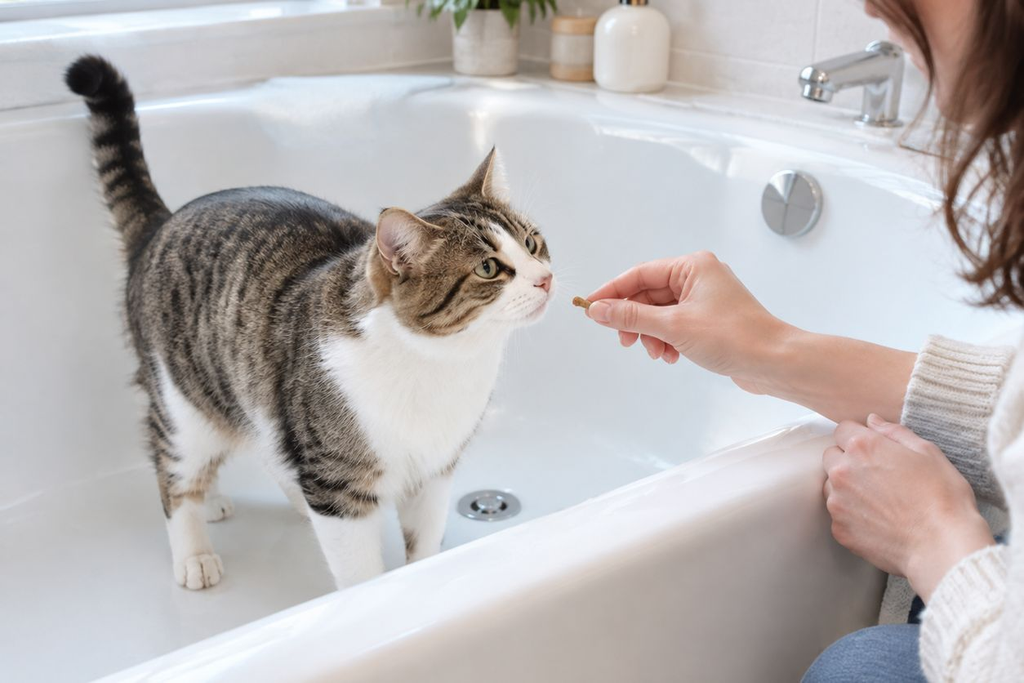
If your cat dislikes being handled, jumping straight into a bath can make the experience frightening. Instead, help your cat become comfortable with the bathroom and the bathing equipment before bath day.
Let your cat explore the empty bathtub or sink without water. Offer treats and gentle praise so it can build positive associations with the space.
If your cat tolerates paw handling, practice touching its feet gently for short periods. You can also introduce a damp washcloth before attempting a full bath.
Never force these practice sessions. If your cat becomes anxious, stop and try again later. A few short, positive experiences can be more helpful than one stressful attempt.
4. Keep the Bath Short and Gentle
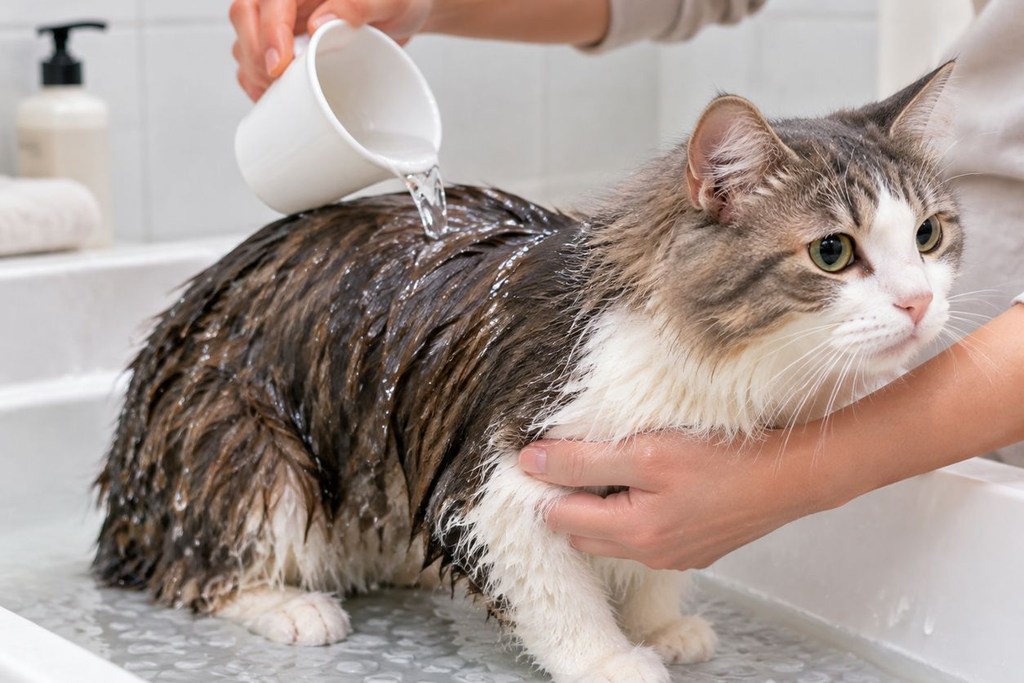
Once everything is ready, gently place your cat on the non-slip surface. Use a cup to wet its body slowly with lukewarm water, avoiding the face, ears, eyes, and nose.
Apply a small amount of cat-safe shampoo according to the product instructions. Massage it gently through the coat without rubbing aggressively or pulling tangled fur.
Rinse thoroughly because shampoo residue can irritate your cat’s skin or be swallowed during grooming. Use a damp washcloth to clean the face instead of pouring water over it.
Speak calmly throughout the process, and move slowly. If your cat becomes extremely distressed or aggressive, stop rather than trying to overpower it.
5. Protect Yourself From Scratches
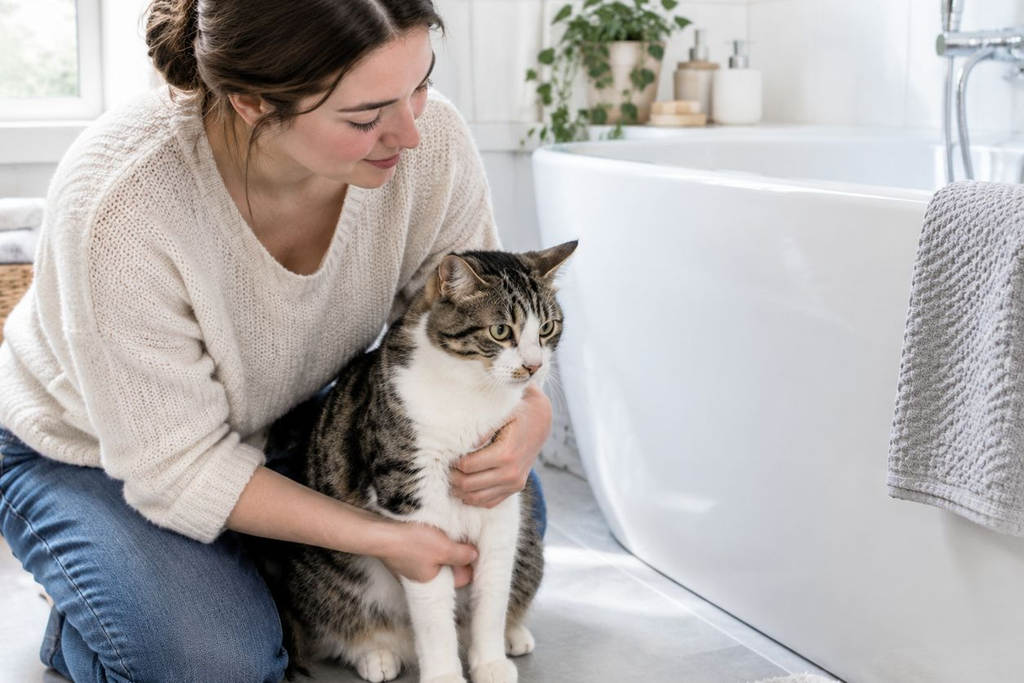
Even a friendly cat may scratch or bite when frightened. Avoid holding your cat tightly or pinning it down, as this can increase panic and the risk of injury.
Keep your movements calm, and allow your cat to maintain a comfortable position. Wearing a long-sleeved shirt may provide some protection, but it is not a substitute for gentle handling.
If your cat struggles intensely, repeatedly tries to escape, or becomes aggressive, end the attempt if you can do so safely. A veterinarian or professional groomer experienced with cats may be a better option.
Never punish your cat for scratching, hissing, or trying to escape. These behaviors usually indicate fear or discomfort.
6. Turn Drying Time Into Comfort Time
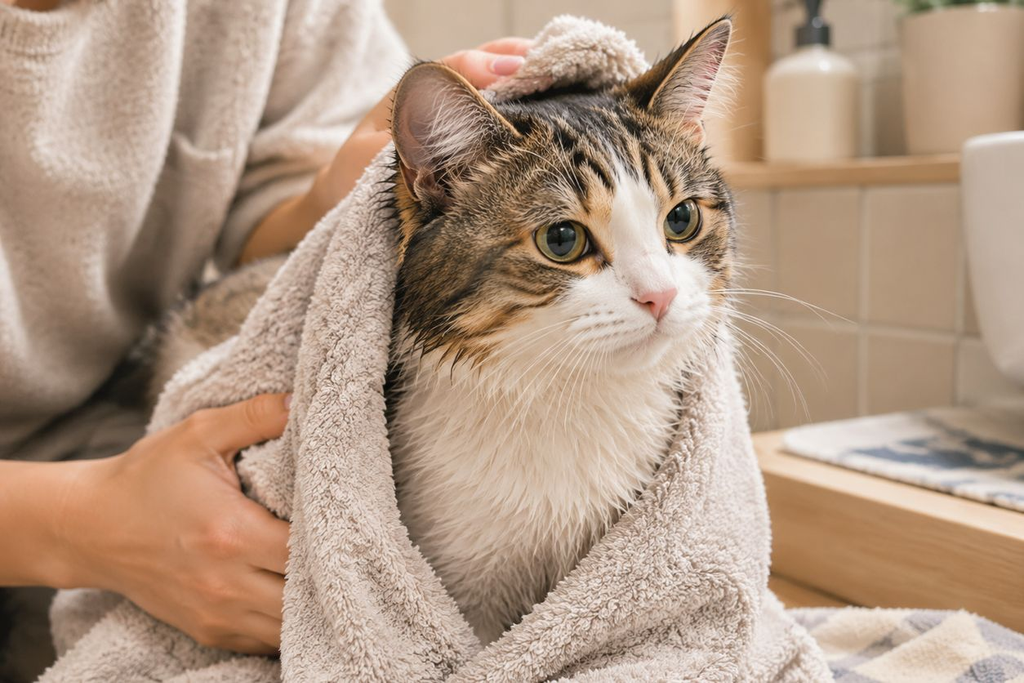
Congratulations! You have made it through the bath. Now comes the important job of helping your cat dry and feel safe again.
Wrap your cat in a soft, absorbent towel and gently pat its fur. Avoid vigorous rubbing, which can tangle the coat or upset your cat.
Keep your cat in a warm, draft-free room until it is sufficiently dry. Long-haired cats may need additional gentle towel drying to prevent damp fur from becoming tangled.
Avoid using a hair dryer unless your cat is comfortable with it and you can use a safe, low-heat setting. Noise and hot air can frighten or injure cats.
Once your cat is calm, offer a favorite treat, a comfortable resting place, and some quiet time.
7. Reward Your Cat and Learn From the Experience
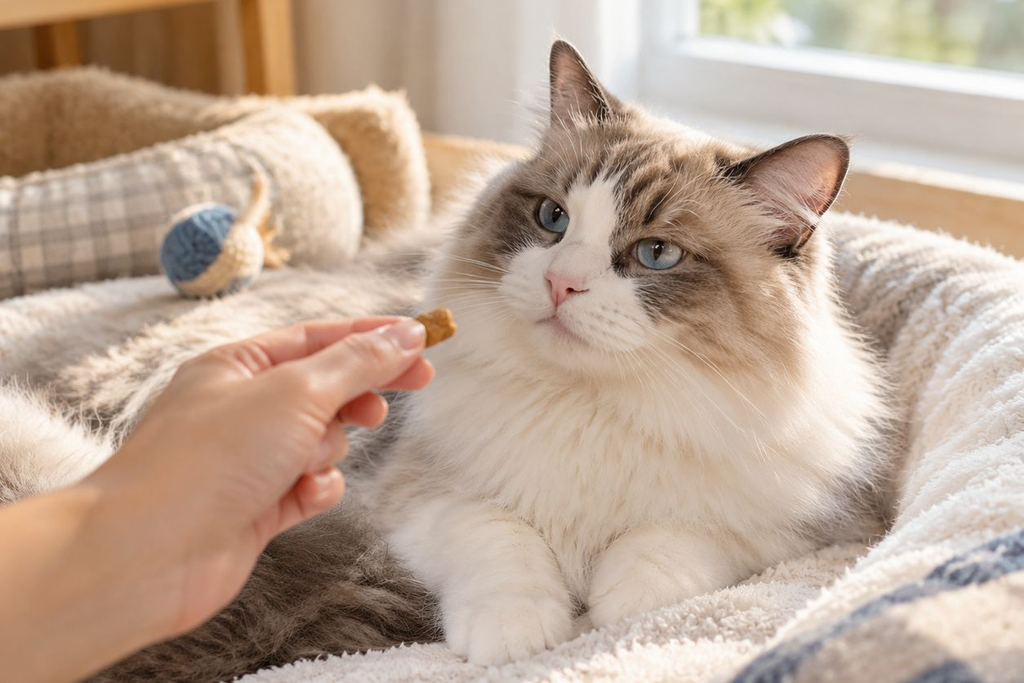
Your cat may behave as though you have committed an unforgivable crime after bath time. Do not take it personally. Give your cat space if it wants to be alone, and avoid immediately picking it up again.
Offer treats, praise, or a favorite toy when your cat is relaxed. This helps create a more positive association with grooming.
Afterward, think about what worked and what caused stress. Perhaps your cat preferred a shallow basin, a quieter room, or a shorter cleaning session.
Remember, not every cat needs a full bath. Regular brushing, spot cleaning with a damp cloth, and appropriate grooming may be enough for most cats.
Final Thoughts
Surviving a cat bath is less about winning a battle and more about keeping your cat safe and comfortable. Prepare your supplies, use cat-safe products, work gently, and stop if your cat becomes severely distressed.
If bathing is medically necessary but your cat cannot tolerate it, ask your veterinarian about safer alternatives or professional grooming.
And when the bath is finally over, let your cat relax. You may have survived the experience, but your cat probably deserves a little time to recover, too.