
This Pallas’s Cat Kitten Looks Like It Has Already Had a Long Day

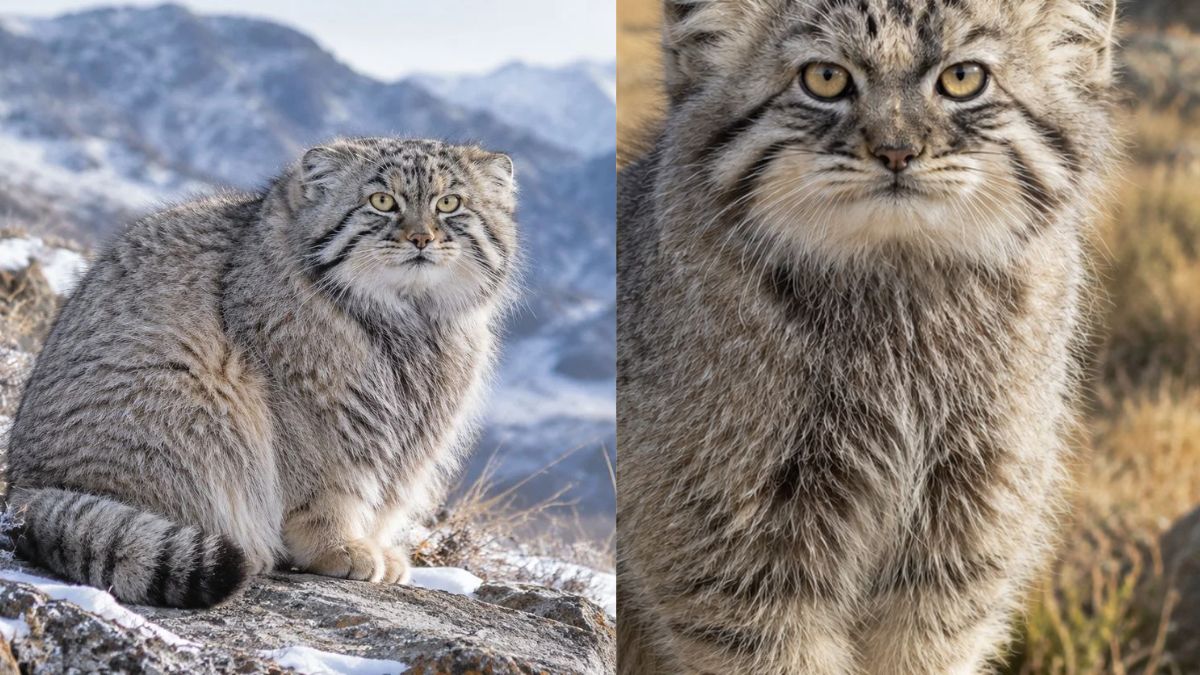
Some kittens look ready to play the moment they open their eyes. This little Pallas’s cat, on the other hand, looks as though it would prefer five more minutes of sleep and absolutely no questions.
With its round face, tiny-looking ears, and serious expression, the kitten has the kind of appearance that makes people stop scrolling. It might look like a grumpy house cat, but there is much more to this unusual animal than its memorable face.
The Pallas’s cat, also known as the manul, is a wild feline native to parts of Central Asia. It has evolved to survive in rugged landscapes where temperatures can be extreme and finding food takes patience. Its expression may look comical to us, but its physical features have real purposes in the wild.
Why Does a Pallas’s Cat Always Look So Serious?
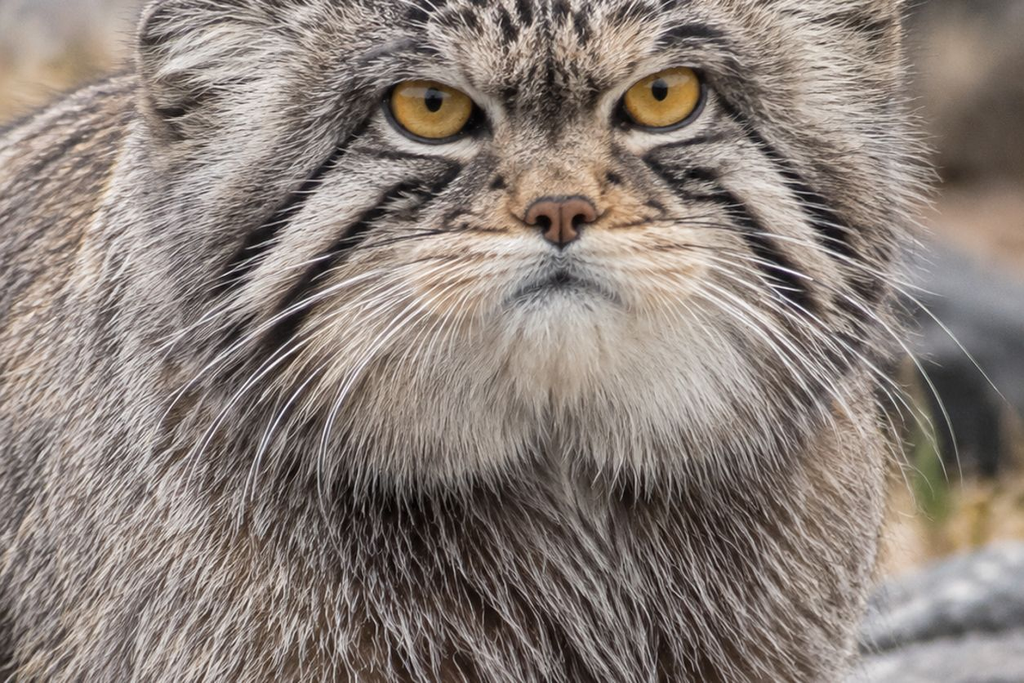
The Pallas’s cat has several features that make its face different from that of a typical domestic cat. Its ears are small, rounded, and set low on the sides of its head. Its face is broad, and its pupils are round rather than the vertical slits commonly seen in domestic cats.
Together, these features create the distinctive expression that has earned the species a reputation for looking permanently unimpressed.
However, a serious-looking face does not mean the animal is actually angry or unhappy. We cannot determine a wild animal’s emotional state simply by looking at a photograph. The kitten might be resting, watching something nearby, or responding to its surroundings.
Its low-set ears also have a practical advantage. When a Pallas’s cat peers over a rock, its ears are less exposed, helping it keep a low profile while watching what is happening around it.
That Fluffy Coat Has an Important Job
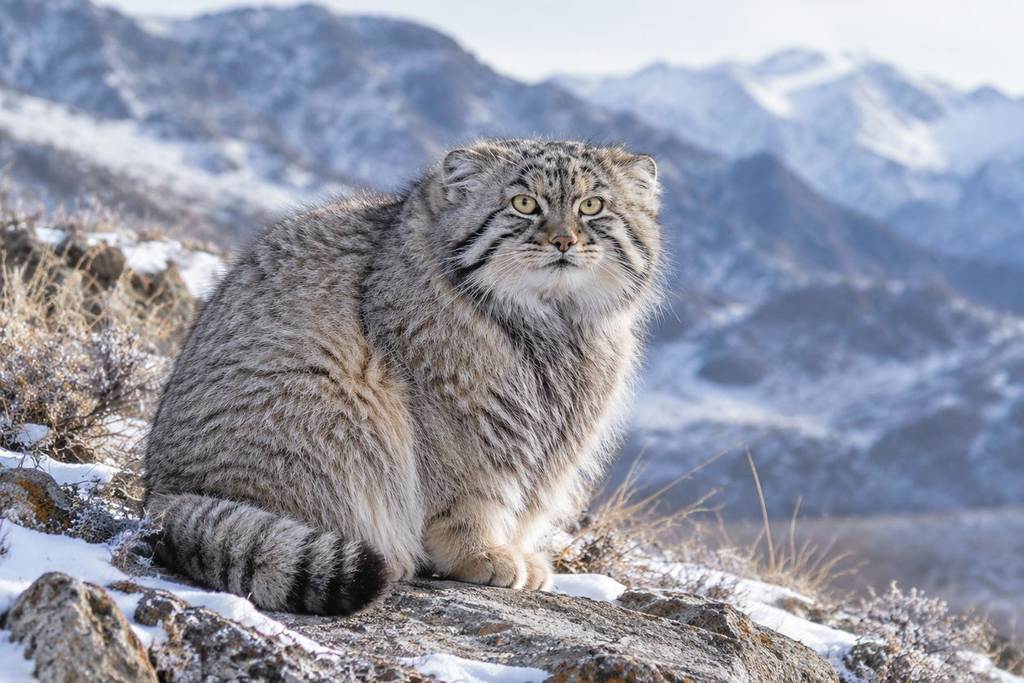
The kitten’s thick coat is not just an attractive feature. Pallas’s cats live in environments that can experience severe cold, strong winds, and wide temperature changes.
Their exceptionally dense fur helps insulate their bodies in cold conditions. The coat can also change with the seasons, becoming heavier in winter and generally shorter in warmer weather.
The long fur makes the cat look round and oversized. Beneath all that fluff, however, it is roughly comparable in size to a small domestic cat. Its stocky body and short legs give it a low profile that can help it move through rocky terrain without standing out.
Its coat also helps it blend into its surroundings. Grayish, tan, and brown tones can provide camouflage among rocks, dry grass, and other natural features of its habitat. Many hairs have pale tips, giving the fur a slightly frosted appearance.
A Wildcat That Prefers Rocks to Sofas
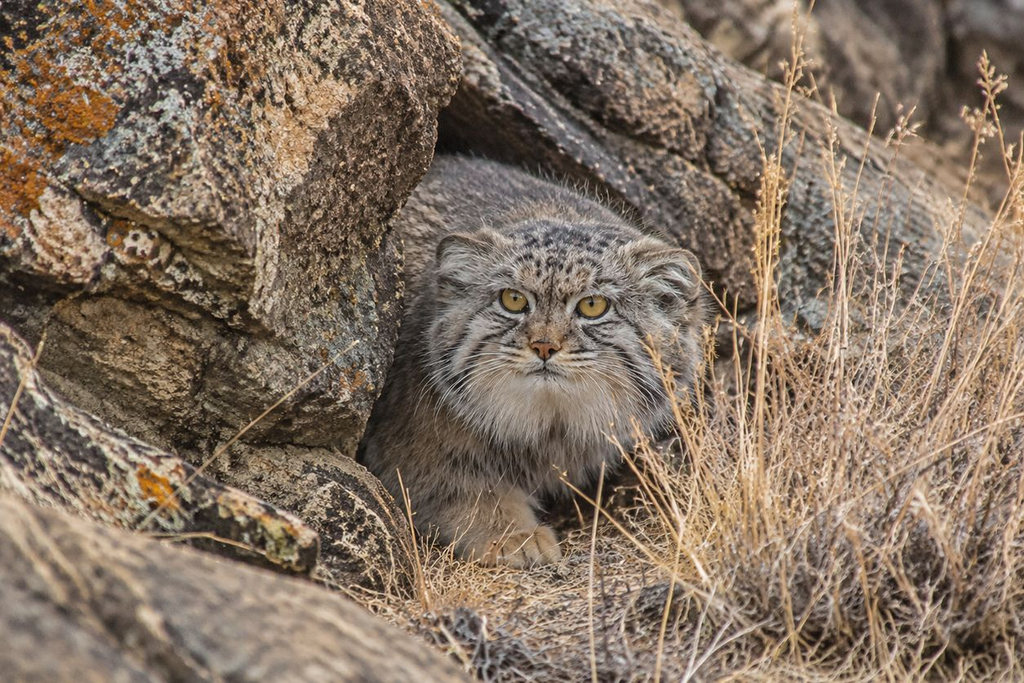
Pallas’s cats are found across parts of Central Asia, including Mongolia, China, and Russia, as well as other countries within their range. They typically inhabit dry, open landscapes such as steppe grasslands, shrublands, hills, and rocky terrain.
These cats are not simply wandering across empty plains. They often use rock crevices, caves, and burrows made by other animals as places to hide and shelter.
Such refuges are important for more than a comfortable nap. They offer protection from harsh weather and predators, and suitable den sites are especially important when females give birth and raise kittens.
Pallas’s cats are also known for keeping still when danger approaches, relying on their camouflage when suitable cover is available. In a landscape where rocks and dry vegetation are everywhere, staying low and blending in can be more useful than drawing attention through sudden movement.
Unlike a pet cat that might choose a cardboard box or a sunny windowsill, a Pallas’s cat depends on the features of its natural habitat.
Hunting Requires Patience, Not Speed
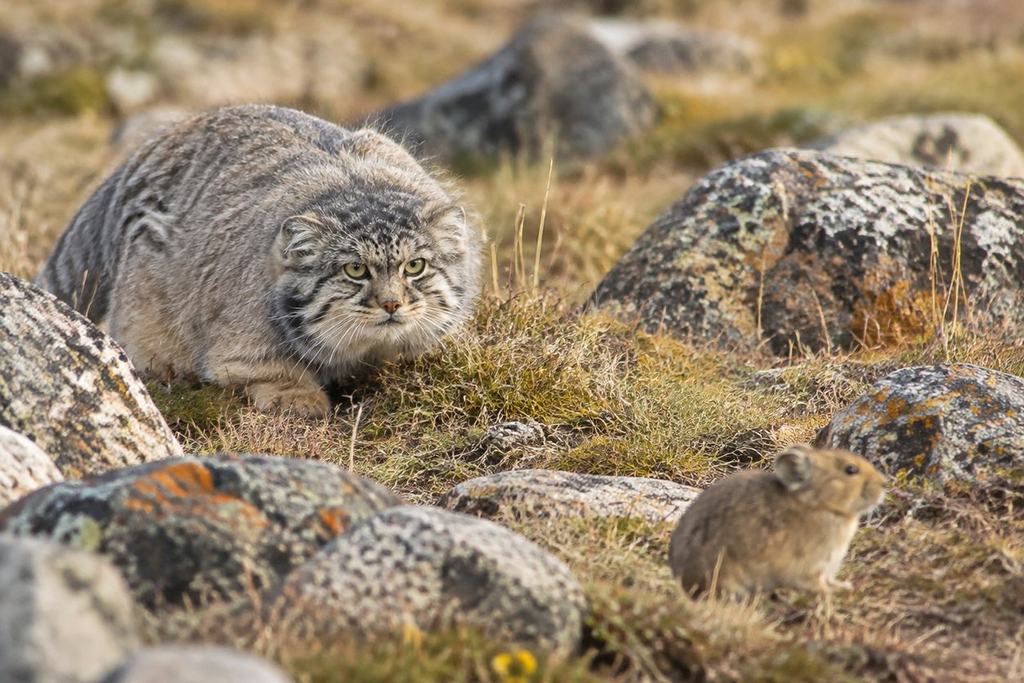
A Pallas’s cat may look like a ball of fur, but it is a skilled predator. Its diet includes small mammals such as pikas, voles, gerbils, and other rodents. It may also eat small birds and reptiles.
Rather than relying on long-distance chases, it often hunts by moving carefully, using available cover, or waiting near places where prey may appear. It may ambush small animals near burrow entrances, using its short legs and low body to approach without being noticed.
This hunting style makes sense for a cat that lives in open landscapes where hiding places are valuable. A sudden pounce at the right moment may be more useful than an exhausting chase across exposed ground.
Pallas’s cats are generally most active around dawn and dusk, although their activity can vary. During daylight hours, they often rest in sheltered places before becoming active again when conditions are more suitable for hunting.
The same animal that looks as though it has no interest in doing anything may actually be alert to every movement around it. In the wild, watching and waiting can be an essential part of finding a meal.
A Funny Face, a Remarkable Wildcat
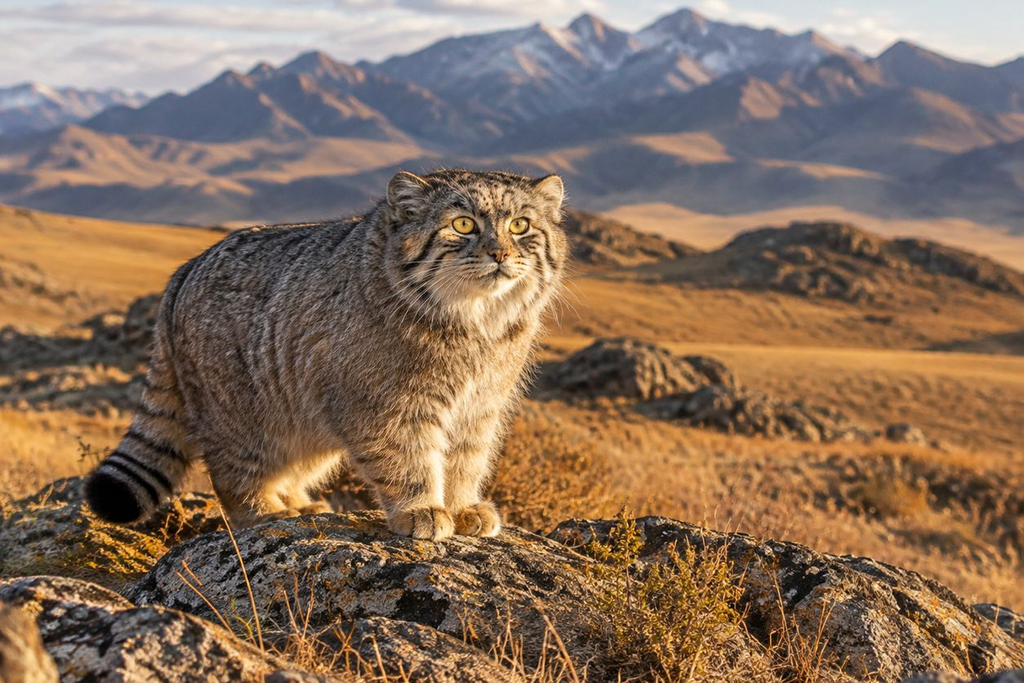
It is easy to imagine that this kitten is judging everyone around it. Its round face and solemn expression practically invite that interpretation.
But the real story is even more interesting. Pallas’s cats have dense insulating fur, unusual facial features, and hunting strategies suited to rocky, often cold environments. They are not domestic cats in miniature, and their needs are very different from those of pets.
So, if this kitten looks as though it has already had a long day, enjoy the joke. Just remember that its serious expression is part of what makes this wildcat unique—not proof that it is grumpy.
Image disclosure: Images accompanying this article may be AI-generated illustrations. They are intended to illustrate Pallas’s cats and their habitat and do not necessarily depict real animals or verified wildlife sightings.

Touche. Solid arguments. Keep up the amazing work.
Appreciate your thoughtful words. Insightful comments like yours make these discussions truly worthwhile. 😊❤️