Why Does My Cat Bite Me While Purring? 7 Reasons You Should Know

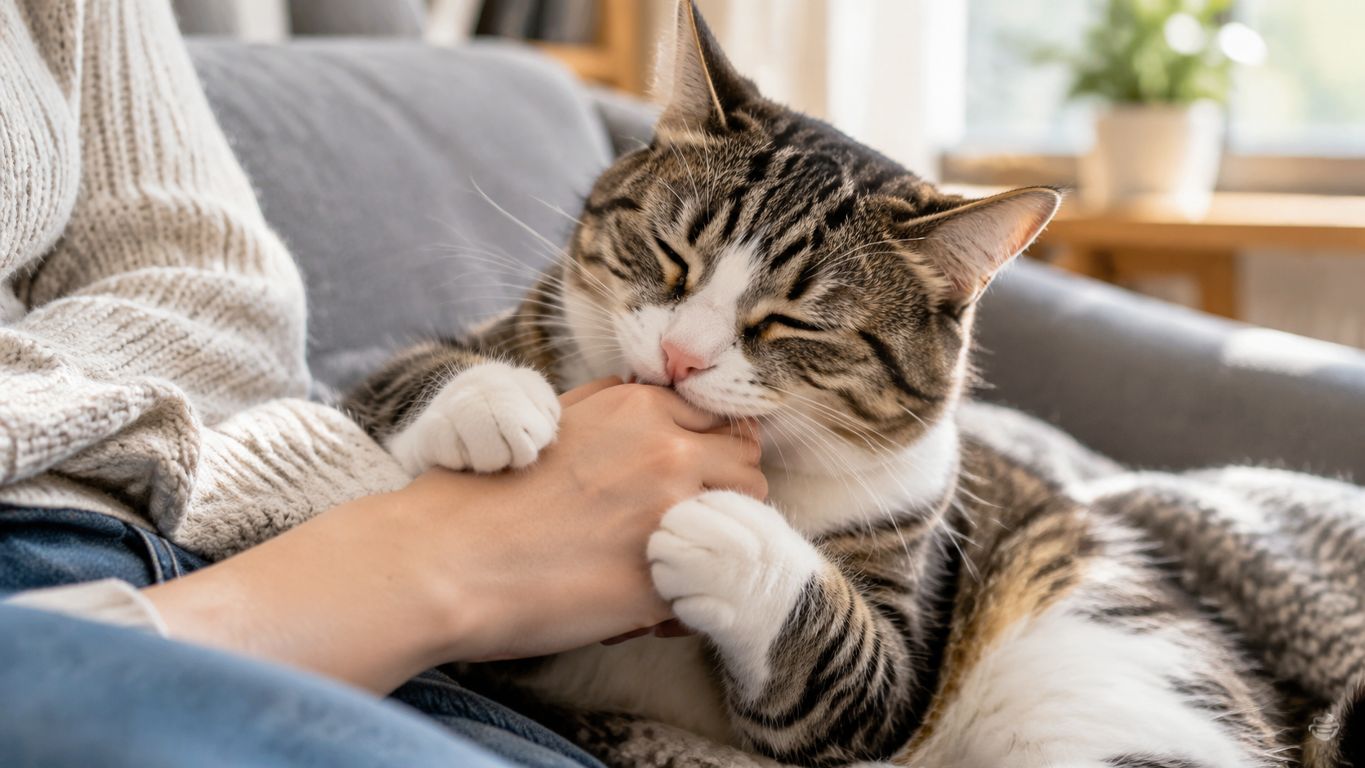
Have you ever been petting your cat while it purrs happily, only to receive a sudden little bite? It can be confusing, especially when your cat seems relaxed and comfortable just moments before. You might wonder whether your cat is showing affection, feeling annoyed, or trying to tell you something.
The good news is that a cat biting while purring is not always a sign of aggression. Cats communicate through body language, sounds, and physical contact. Understanding these signals can help you figure out what your furry friend is trying to say.
Let’s explore seven common reasons your cat might bite you while purring and what you can do about it.
1. Your Cat Is Showing Affection
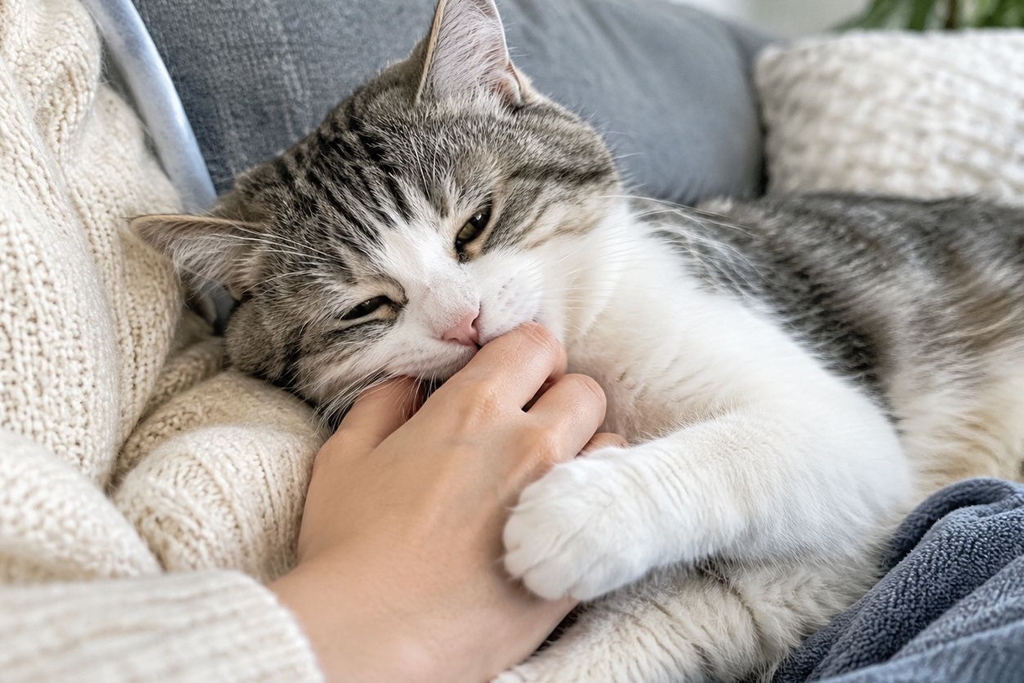
Some cats give gentle nibbles as part of social bonding. These little bites are sometimes called love bites and may happen when your cat is enjoying your company.
You might notice your cat purring, rubbing its face against your hand, and gently nibbling your fingers. This behavior can be a form of friendly interaction, particularly if your cat remains relaxed.
However, not every bite is an expression of love. Pay attention to how hard your cat bites and what its body language communicates. A gentle nibble without tension is different from a sudden, painful bite.
If your cat’s bites become uncomfortable, calmly stop interacting for a moment. This teaches your cat that gentle contact is welcome, but biting skin is not.
2. Your Cat Has Had Enough Petting
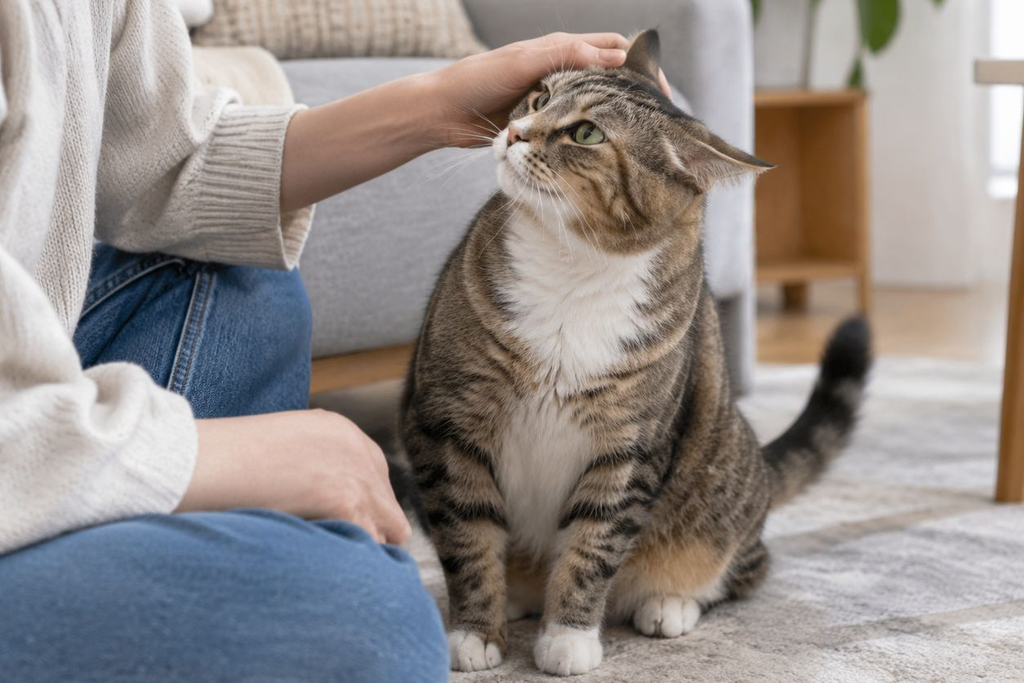
One of the most common reasons cats bite during petting is overstimulation.
Your cat might enjoy being stroked for a while, but eventually, the repeated touching can become uncomfortable. Instead of walking away, it may give you a quick bite to communicate that it wants you to stop.
Watch for warning signs such as a twitching tail, flattened ears, tense muscles, rippling skin, or a sudden turn of the head toward your hand.
If you notice these signals, stop petting immediately and give your cat some space.
Every cat has a different tolerance for physical contact. Some enjoy long cuddling sessions, while others prefer only a few gentle strokes. Learning your cat’s preferences can help prevent unexpected bites.
3. Your Cat Wants to Play
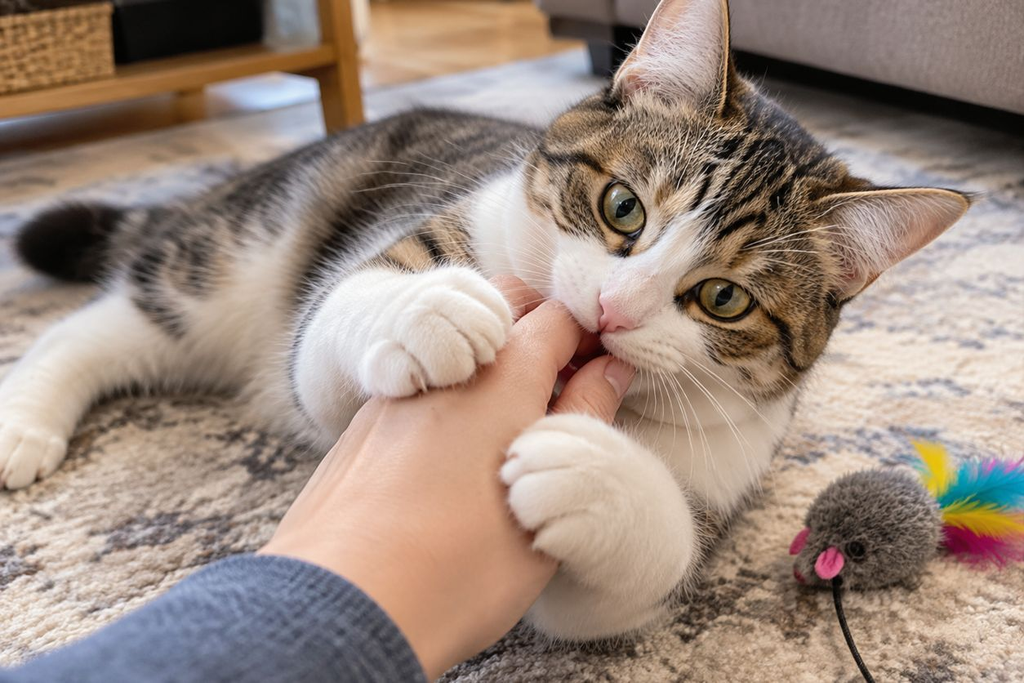
Cats are natural hunters, and biting is part of their normal play behavior. Young cats, especially kittens, often explore the world using their teeth and paws.
If your cat purrs, grabs your hand, and starts nibbling or kicking with its back legs, it may be treating your hand like a play object.
Although this behavior can look harmless when your cat is small, allowing it to bite your hands regularly may encourage habits that become painful as it grows.
Instead, redirect your cat’s attention toward an appropriate toy, such as a feather wand, soft toy, or kicker toy. Avoid using your fingers as playthings.
Regular interactive play can help your cat release energy and satisfy its natural hunting instincts without hurting you.
4. Your Cat Is Feeling Conflicted
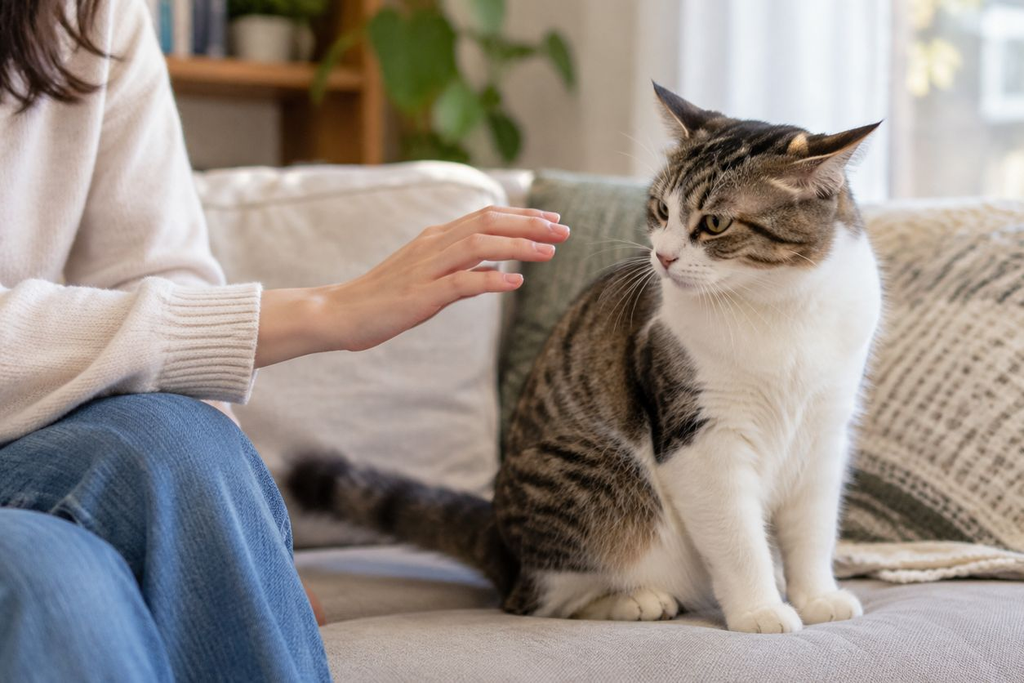
Cats can experience mixed feelings. Your cat may enjoy sitting beside you and purring while also feeling uncertain about being touched.
For example, it might approach you because it wants company but become uncomfortable when you stroke its belly or touch its paws.
Purring does not always mean a cat is completely happy. Cats may also purr when they feel stressed, frightened, or unwell.
Look at the entire situation rather than relying on purring alone. A relaxed body, soft eyes, and voluntary contact usually suggest comfort, while tense muscles, pinned-back ears, or attempts to move away may indicate discomfort.
Give your cat the choice to approach and leave freely. Respecting these boundaries helps build trust over time.
5. Your Cat Wants Your Attention

Some cats learn that biting gets an immediate response from their owners. If your cat gently bites you whenever you are working, watching television, or using your phone, it may be asking you to pay attention.
Your cat might want food, playtime, companionship, or simply a little interaction.
Try to identify what usually happens before the biting begins. If your cat regularly seeks attention at certain times, provide scheduled play sessions and consistent feeding routines.
Reward calm behaviors, such as sitting beside you without biting, with attention when appropriate.
Avoid shouting or physically punishing your cat. These reactions can increase fear and damage the bond you share.
6. Your Cat May Be Uncomfortable or in Pain
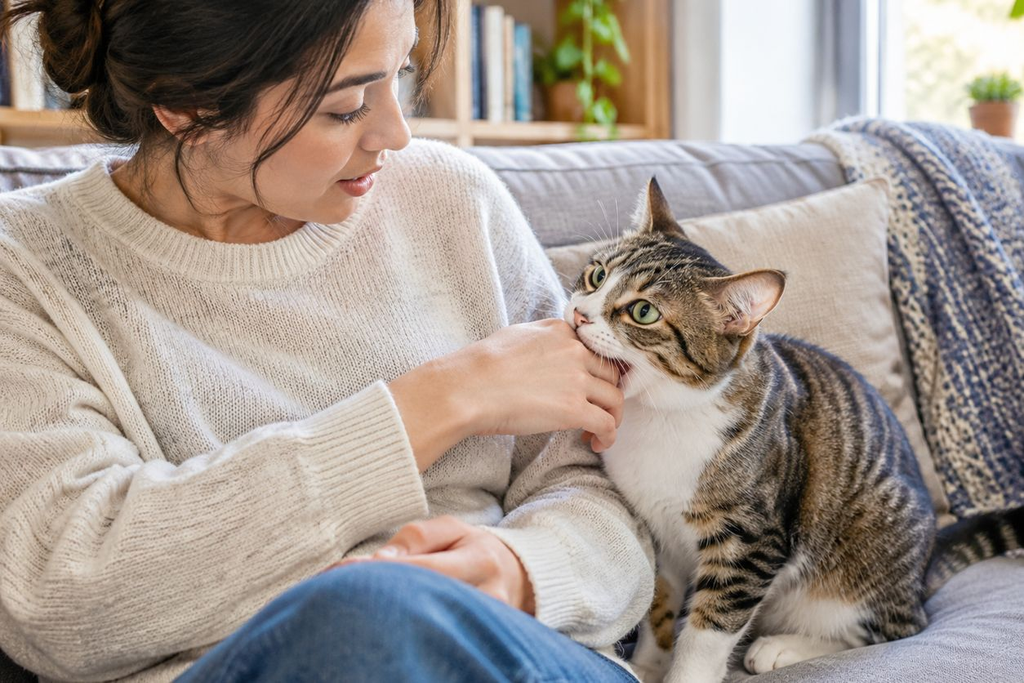
Sometimes, biting during purring can indicate physical discomfort. A cat that normally enjoys being touched may suddenly bite when you stroke a particular area.
Possible causes include injuries, dental problems, skin irritation, or other health conditions.
Watch for additional changes, such as hiding more often, reduced appetite, unusual vocalizations, changes in grooming, or reluctance to jump and move.
If your cat develops sudden or repeated biting behavior, particularly when touched, arrange a veterinary examination. Do not assume the behavior is simply a personality change.
Avoid repeatedly touching a painful area to test your cat’s reaction. Give it space until you can determine what is wrong.
7. Your Cat Is Communicating Its Boundaries
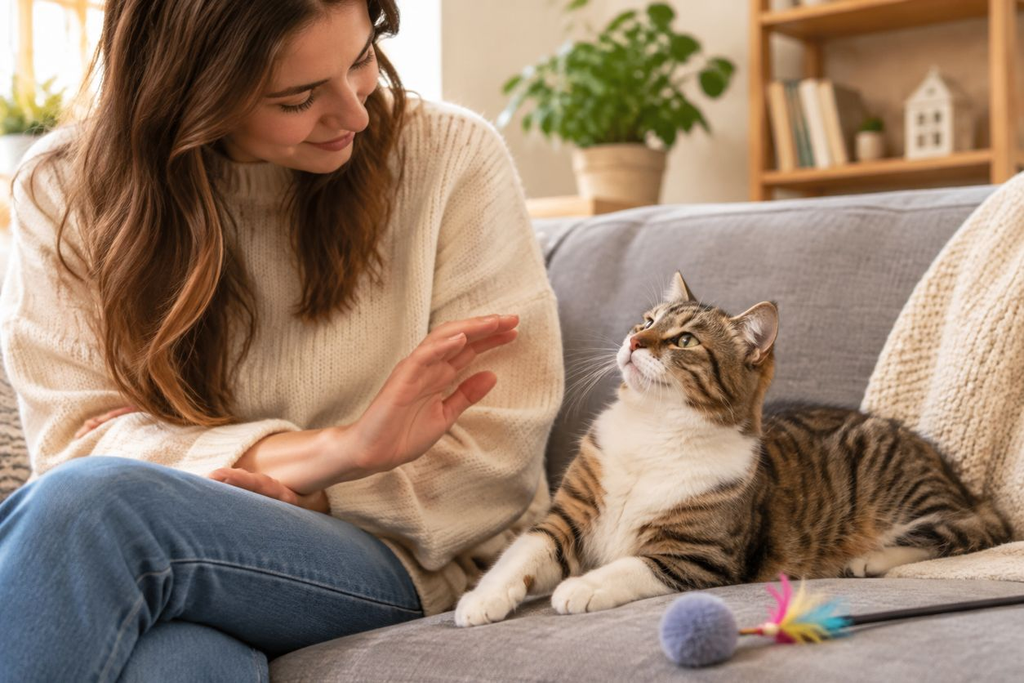
Cats use biting as one way to communicate when they want an interaction to change or end.
Your cat may purr while sitting on your lap, then gently bite when it wants you to stop touching it. This does not necessarily mean your cat dislikes you. It may simply prefer to enjoy your company without constant petting.
Learn to recognize the difference between a relaxed nibble and a warning bite. When your cat signals that it has had enough, stop interacting and allow it to decide what happens next.
Respecting these boundaries can make your cat feel safer and help strengthen your relationship.
Final Thoughts
If your cat bites you while purring, it could be showing affection, asking to play, reacting to too much petting, or communicating discomfort. Purring alone cannot tell you exactly how your cat feels.
Pay attention to body language, avoid encouraging hand-biting, and give your cat space when it shows signs of irritation. If the behavior starts suddenly or seems linked to pain, consult a veterinarian.
With patience and observation, you can better understand your cat’s signals and enjoy a happier, more comfortable relationship with your furry companion.